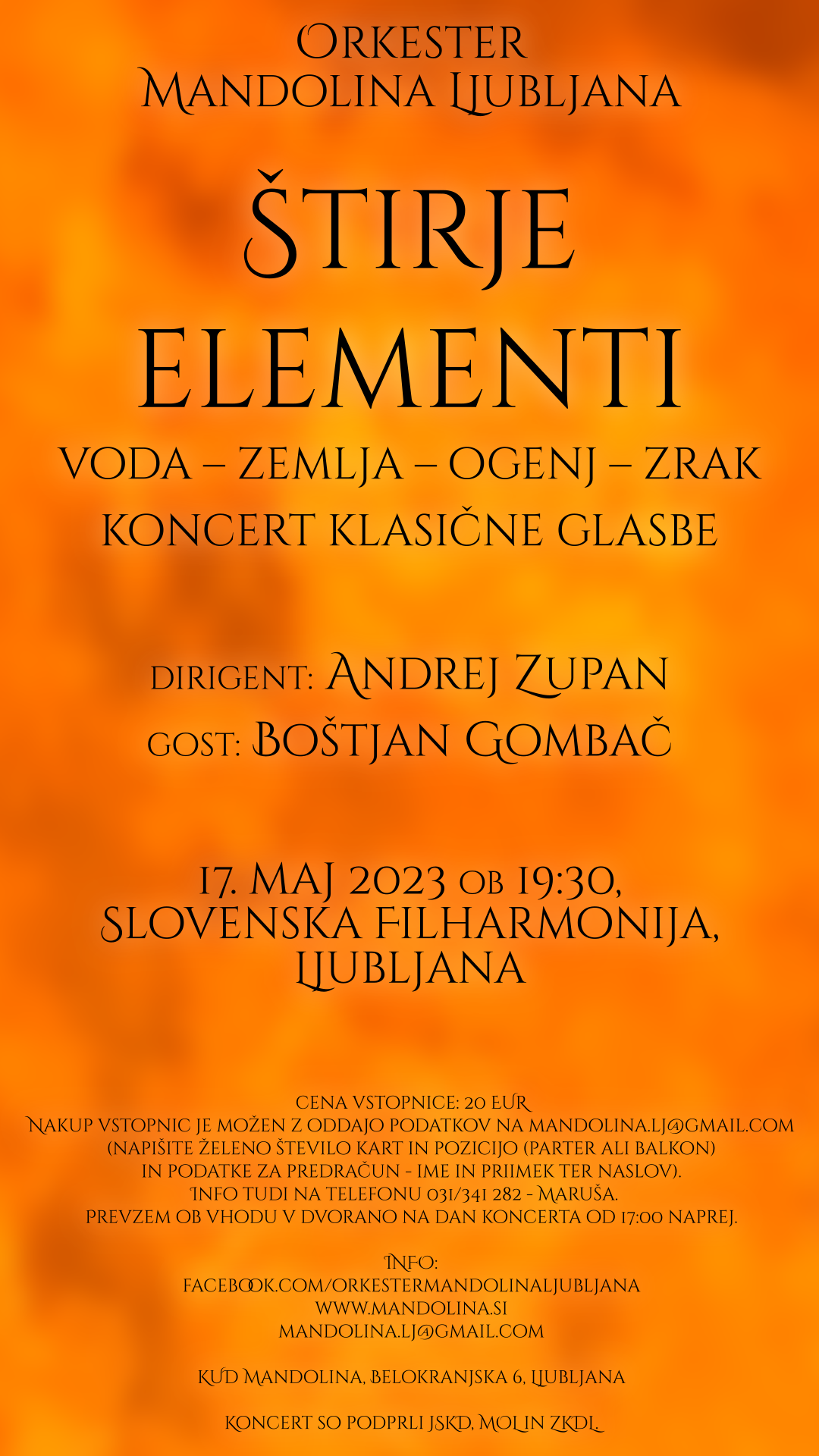
17. maj 2023
ŠTIRJE ELEMENTI - voda-zemlja-ogenj-zrak
Premierni koncert klasične glasbe
Slovenska filharmonija ob 19:30
vstopnice (20 EUR) na mandolina.lj@gmail.com ter na blagajni na dan koncerta (3 ure pred začetkom)
Saj preverjate našo FB stran? Smo skoraj dnevno ažurni. Klik :)




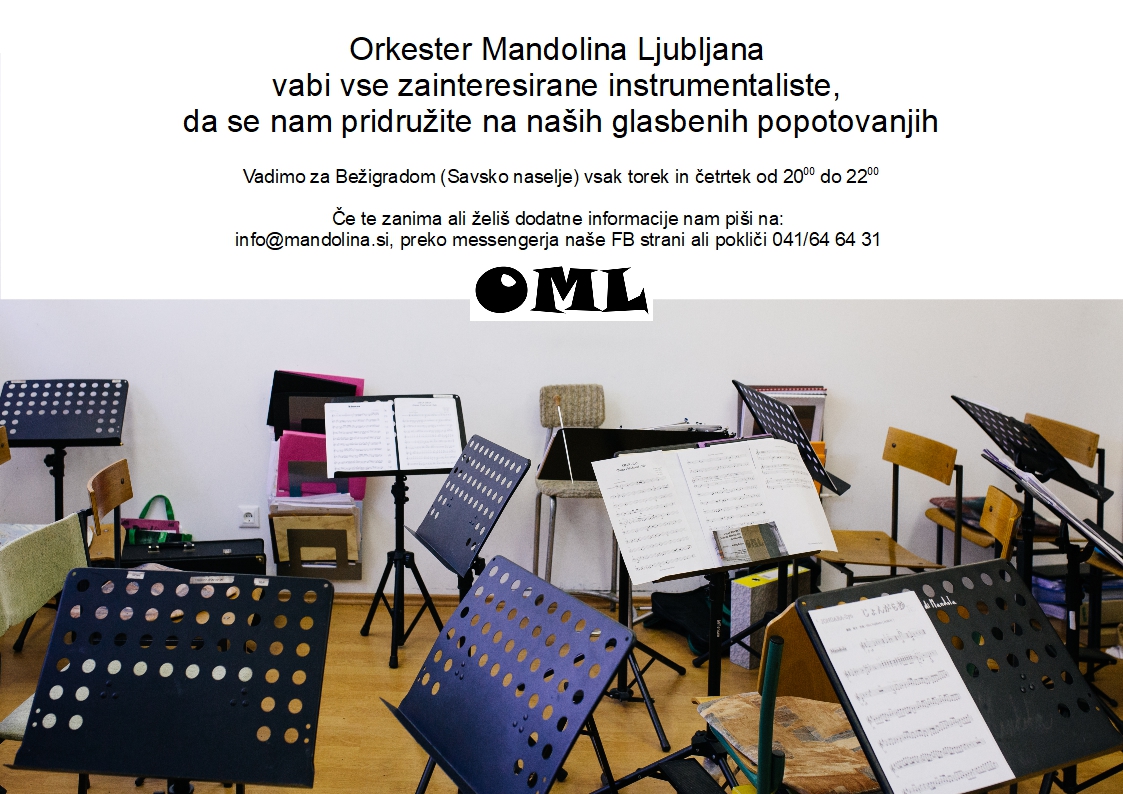
Za vse, ki bi radi obvladali nov inštrument, nadgradili staro znanje ali pa preizkusili nov hobi, imamo šolo mandoline, ki jo vodi naša koncertmojstrica Tanja Pirc :) Vec info na FB strani --> Link
O nas
Orkester Mandolina Ljubljana je ena redkih, vsekakor pa najbolj prepoznavna zasedba v Sloveniji, ki si je na svoji glasbeni poti za sopotnico izbrala mandolino. V našem prostoru se mandolina šele zadnja leta pogosteje vključuje v najrazličnejše zvrsti glasbe, od klasične do pop. Tako si štejemo v čast in dolžnost, da domači publiki približamo to nežno strunsko glasbilo ter izvirno mandolinsko glasbo. Na našem repertoarju so številne tudi skladbe klasičnih skladateljev, priredbe ljudskih napevov, etno glasba, filmska in pop-rock glasba in zimzelene melodije. Po devetintridesetih letih delovanja imamo za sabo številne uspešne nastope doma in v tujini, o dobri orientaciji na naši glasbeni poti pa pričajo pohvale raznih kritikov in predvsem zadovoljna in vedno bolj številčna publika...